How the alarm was set
Enja got a wind alarm on 14 October, and its thresholds came from her own record. In ninety-three days at the berth since July, the strongest ten-minute average her masthead had seen was 24 knots and the strongest three-second gust 38.5. The alarm sits just inside that. It calls strong at a 22-knot mean or a 33-knot gust and gale at 30 or 42, and it only says eased once both have stayed under 18 and 26 for half an hour. Set that way, it would have gone off on about four of those ninety-three days. We wanted it rare.
For ten nights it said nothing. At 01:40:54 on Sunday the 25th it posted this to the boat's Slack channel:
💨 Strong wind at the berth — 10 kn, gusts 36 kn from SE (10-min mean). Worth a look at lines, fenders and canvas.
The strongest gust of the night had come three seconds earlier: 35.9 knots at 01:40:51, from 119°.
Fifteen hours of falling pressure
The barometer moved first. At six on Saturday evening the one in the saloon read 991.5 hectopascals, and it then fell steadily for ten and a half hours. After midnight it was dropping about 3.3 hectopascals an hour, the kind of rate a forecast would put a warning on. It bottomed out at 969.1 at half past three, recovered a hectopascal, and was falling again when the night ended. At eight o'clock it read 967.7, 24 hectopascals down in fifteen hours.
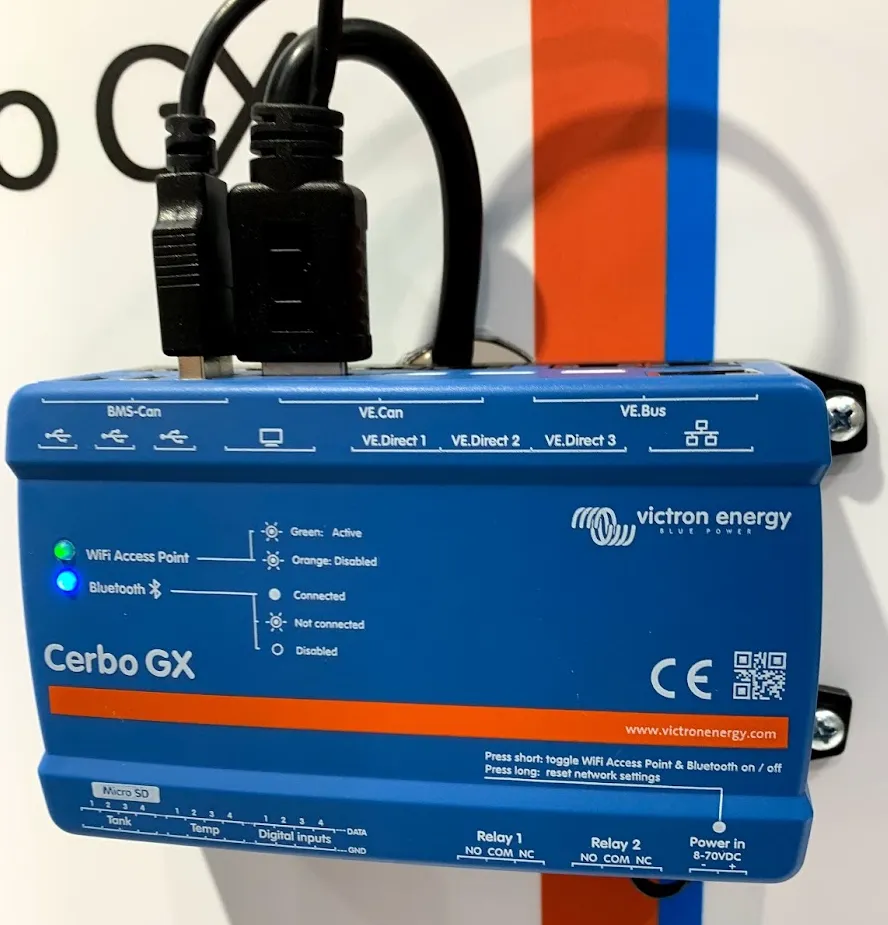
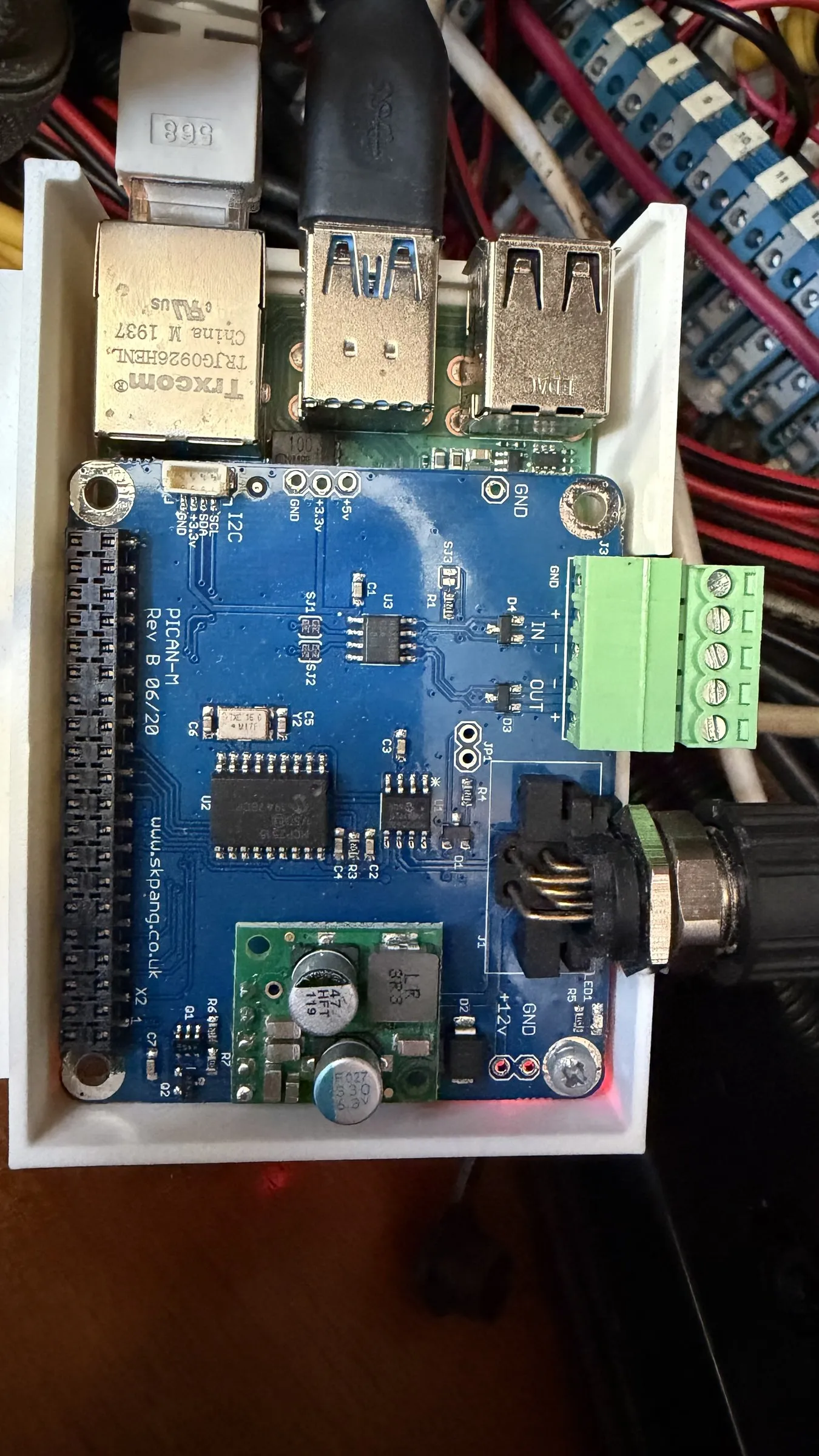
That barometer is inside a RuuviTag on the saloon bulkhead, and for eight weeks before this night the boat couldn't hear it. The Bluetooth receiver in the Victron Cerbo had stopped listening on 26 August without telling anyone, and only a reboot on Thursday brought it back. A week earlier, this graph would have had two panels.
Ten-minute bins from 18:00 on 24 October to 08:00 on 25 October, local time; the clocks went back at 03:00, so the hour from 02:00 happened twice and the axis runs on in real time across it. Wind: the ten-minute mean sat between 5.5 and 10 knots all evening, while the three-second gusts ran at twice that, 12 to 21 knots. After 01:00 both rose; the strongest gust was 35.9 knots at 01:40 summer time, from 119°, in a ten-minute mean of 16.1 knots, and the 33-knot alarm fired three seconds later. The mean stayed between 10 and 16 knots and the gusts between 20 and 36 knots until 04:10 winter time; the alarm called the wind eased at 04:42; between 05:40 and 06:40 it came back with gusts of 28 to 32.95 knots, the highest 0.05 knots under the alarm level, so it stayed quiet. Barometer: 991.5 hectopascals at 18:00, falling without a pause to 969.1 at 03:30 winter time, recovering by a hectopascal over the next hour and a half, then falling again to 967.7 at 08:00: 24 hectopascals in 15 hours, about 3.3 per hour at its steepest after midnight. Heel: the largest roll in each ten minutes was around half a degree all evening, with one blip to 1.3 at 22:20, rose with every burst of gusts, and reached 2.97 degrees to port at 03:38 winter time.
Enja's own recorder: true wind from the masthead via signalk-derived-data, pressure from the Salong RuuviTag, roll from the trusted compass.
Gusts against the average
The two wind lines sat a long way apart all night. Through the evening the ten-minute mean idled between five and ten knots while the gusts ran at twice that. At the peak the mean was only 16 knots, less than the 24 she had already seen this summer, and the gust that set off the alarm was 2.2 times that.
That ratio is why the alarm watches gusts as well as the mean. Going by the average this was a fresh breeze, yet every few minutes something close to a near gale reached the masthead, and it's those bursts that load the lines and fenders. Oddly, the alarm's own message gave the mean as 10 knots. It judges the ten minutes up to the moment it speaks, and at 01:40:54 the stronger minutes of that bin hadn't happened yet.
It blew from the south-east all night, mostly between 115° and 135°. Twice it swung round to the south for a while, around midnight and again between twenty past four and twenty past five, and that second swing is where the gusts briefly let go.
The hour that happened twice
At 03:00 summer time the clocks went back to 02:00, in the middle of the blow, so the hour from two to three happened twice. It blew both times, with gusts of 21 to 26 knots the first time and 27 to 35 the second. The graph runs in real time and marks the change. A log kept in local time without the offset would have filed the two hours on top of each other. Enja records in UTC, which is why we can tell them apart.
Heel and yaw on her lines
A moored boat can't sail away from a gust, so she leans. Her compass reports roll and pitch, the recorder keeps them four times a second, and the largest heel in each ten minutes follows the gust line closely (the correlation is 0.84). All evening she rocked about half a degree. In the blow she leaned up to 2.97° to port, at 03:38 winter time.
Port is the side she should lean to, and we checked. Her bow points 95° true and the wind came from 119°, about 25° on her starboard bow, and wind on that side pushes the masthead to port. The compass and the anemometer agree.
She also yawed a little against her lines. Her heading wandered over 4.8° during the night, and that wobble tracked the gusts as closely as the heel did (0.88). Pitch never went past 1.6°. Inside, the saloon stayed between 10.0 and 11.7 °C and 67 to 70 % humidity. She was cool, dry and shut up, and the weather didn't get in.
Three things the instruments couldn't tell us
The first is whether she moved. At the berth the GPS reporting position isn't the boat's best one: the trusted receiver goes quiet alongside, and the one left talking is the receiver already known to sit 47 metres from the other two. Its fixes scattered over 4.6 metres typically and 10.7 at the 95th percentile, and the calm hours were as noisy as the windy ones. Anything she did on her lines was smaller than that receiver can see, so the log can't say she stayed put. It couldn't have told either way.
The second is what the depth sounder saw at the peak. The tide moved the water under her by about half a metre over the night, but in the same seconds as the strongest gust the sounder jumped from 5.45 to 6.76 metres and back within about ten readings. The harbour floor did not drop a metre and a half. Either the beam was pointing somewhere else as she heeled and surged, or the water under the hull was full of air. We can't tell which, and that reading isn't the depth.
The third is whether the wind had really finished. At 04:42 the alarm called it over:
🌤 Wind eased — 8 kn, gusts 23 kn from SSE. Peak this blow: 16 kn mean, gusts 36 kn around 01:40.
By its own rule it was right, with half an hour below the line, but the weather wasn't done. An hour later the gusts came back, 26 to 33 knots between twenty to six and twenty to seven, the strongest at 06:37:44 at 32.95 knots. The alarm level is 33, so it missed by five hundredths of a knot and stayed silent.
We won't move the line over one near miss on one night. It's worth knowing, though, that eased from Enja only means the wind has dropped for half an hour. The front can still be on its way through: at eight o'clock the barometer was still falling.